
If you’ve searched “cat water fountain,” you already know the problem: hundreds of near-identical stainless steel and plastic units, all claiming to be the quietest, the easiest to clean, the one vets recommend. We compared the real differences between materials, pump types, and price tiers — plus our own in-depth Catit Flower Fountain review for anyone specifically considering that model.
RESEARCH-BASED GUIDE
Some links in this article are affiliate links. If you buy through them, we earn a small commission at no extra cost to you. We only recommend products we’ve researched thoroughly.
This guide is based on manufacturer specifications, analysis of thousands of verified customer reviews, and veterinary sources on feline hydration. We have not personally tested every product listed.
Quick Answer
For most cats, a stainless steel fountain is the safest long-term choice — it won’t scratch, harbor bacteria in surface pores the way plastic can, or develop the “chin acne” some cats get from prolonged plastic contact. Ceramic is the premium, most scratch-resistant option if budget allows. Filterless/wireless designs cost less to maintain long-term but need more frequent manual cleaning.
The 5 Best Cat Water Fountains by Category
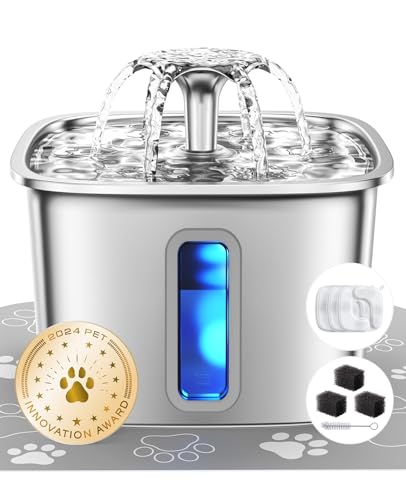
Best Stainless Steel: Veken Innovation Award Winner (108oz)
Veken’s stainless steel line consistently comes up in “best cat water fountain” research — full food-grade stainless construction (not just a steel top over plastic), a 108oz capacity that suits multi-cat households, and a triple-filtration system. Stainless steel resists the scratching and cloudiness that eventually affects every plastic fountain.
Best Ceramic: iPettie Tritone Ceramic Cat Water Fountain
iPettie is one of the more established names in ceramic pet fountains. Ceramic is naturally scratch- and odor-resistant, doesn’t leach anything into the water over time, and tends to be the pick vets mention when owners ask about the “healthiest” material — the tradeoff is a higher price and more careful handling since ceramic can chip if dropped.
Quietest: PETKIT Eversweet Solo SE
PETKIT’s wireless pump design is the quietest common approach in this category — no cord means no motor hum transmitted through a countertop or floor. It’s a smaller 65oz capacity, best suited to single-cat homes rather than multi-cat households.
Best Budget/Filterless: Meowant Wastewater Separation Fountain
Filterless “wastewater separation” designs like this one eliminate the single biggest recurring cost in fountain ownership — replacement filters, typically $10-15 every 2-4 weeks. The tradeoff is a slightly more hands-on manual cleaning routine, since there’s no filter media absorbing debris for you.
Best for Visible Flowing Water: Catit Flower Fountain
Cats that are drawn to visibly moving water — rather than a still surface — tend to respond well to the “flower” style stream. We wrote a full breakdown of pros, cons, flow settings, and the stainless upgrade in our dedicated Catit Flower Fountain review.
Stainless Steel vs Ceramic vs Plastic: Which Material Should You Choose?
- Stainless steel: the best all-around balance — durable, easy to sanitize, resists bacteria buildup in surface scratches. The most common material in “best cat water fountain” recommendations for good reason.
- Ceramic: the premium choice — non-porous, chemically inert, won’t develop the fine scratches that plastic and even some steel finishes eventually show. Best for owners willing to hand-wash carefully and pay more upfront.
- Plastic: the budget entry point. Fine for most cats, but replace it if you notice scratching, cloudiness, or your cat developing chin irritation — porous, scratched plastic can harbor bacteria that a smooth ceramic or steel surface won’t.
Frequently Asked Questions
Do vets recommend water fountains for cats?
Many vets do, particularly for cats prone to urinary issues or kidney disease, since cats are notoriously poor at self-regulating water intake from a still bowl. Moving water encourages more frequent drinking in many (not all) cats — it’s a helpful tool, not a guaranteed fix, and won’t replace a vet-recommended wet-food diet for cats with diagnosed urinary conditions.
Are water fountains really good for cats?
For most cats, yes — increased water intake supports kidney and urinary tract health, which matters more as cats age. Some cats simply ignore fountains and prefer bowls, so it’s worth trying before assuming it will work for your specific cat.
What is the number one rated cat water fountain?
There’s no single universal “best” — it depends on priorities. Veken’s stainless steel line and PETKIT’s Eversweet series are the two most consistently well-reviewed picks across major retailers as of 2026, but ceramic fountains from iPettie score higher specifically on durability and hygiene.
Is it worth getting a cat water fountain?
If your cat currently drinks very little from a bowl, is over age 7, or has a history of urinary crystals or kidney concerns, yes — the upfront cost (typically $25-60) is small relative to the potential vet bills from a urinary blockage. If your cat already drinks well and shows no health flags, a fountain is a nice-to-have rather than a necessity.
FOUNTAIN PROBLEMS, SOLVED
MORE FROM COQUIPAWS
- Catit Flower Fountain Review 2026 — our full in-depth review of the flower-stream style fountain
- Best Cat Litter Boxes 2026 — pair a fountain with the right litter box setup
- Best Automatic Cat Feeders 2026 — round out a fully automated feeding-and-hydration setup
One smart pet email a week.
No spam. No paid endorsements. Just one honest review or guide every Monday — starting with our free safety guide: «27 Toxic Things Hiding in Your Pet's Home».